
Selling a House Checklist: Every Step From Pricing to Settlement
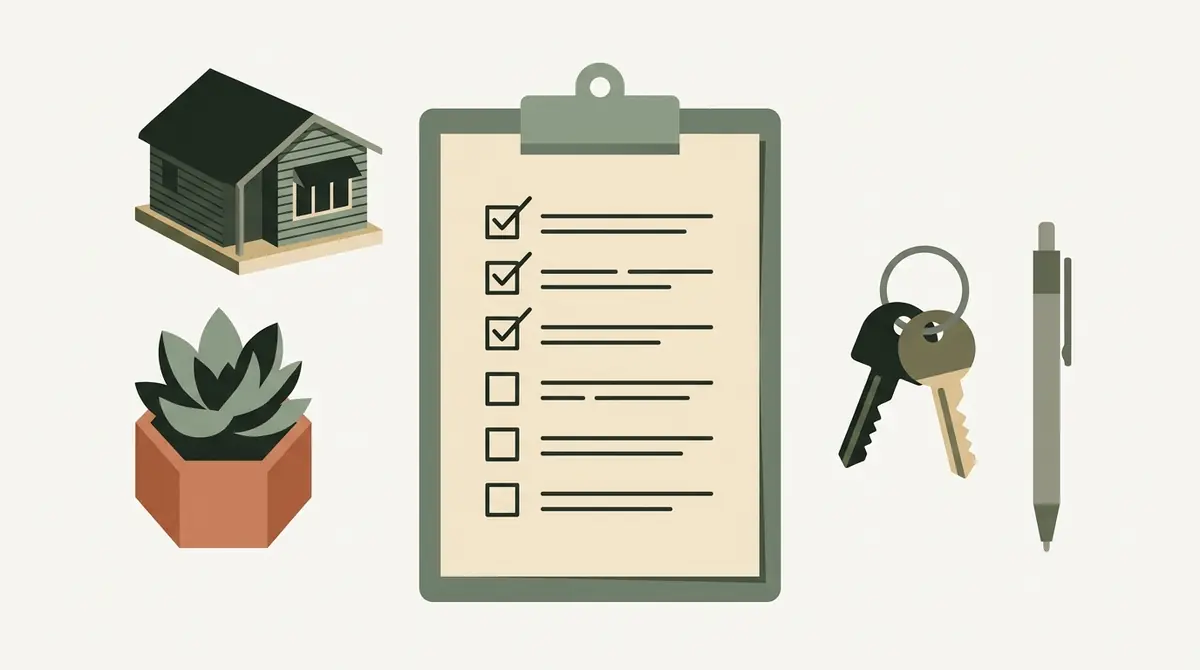
Selling a house involves more steps than most people expect, and missing one, like having the right disclosure documents ready, can delay or even unwind a sale. This checklist covers every step from setting a price to handing over the keys, with the requirements that differ between states.
- 25steps, from asking price to keys
- 5stages, with the state-specific ones flagged
- 30–90days from exchange to settlement, commonly
Tick steps off as you go. Your progress is saved in this browser, and you can print the list.
0 of 25 steps done
1. Before you list 6 steps
-
Compare recent sales of similar homes nearby on realestate.com.au and Domain. Consider an independent valuation if your home is unusual.
-
Do this first, not last. They prepare the contract and disclosure documents and run settlement.
-
Ask for the payout figure, discharge fees and how long the discharge takes, so settlement isn't delayed.
-
Rates notice, title details, strata or body corporate records if applicable, and approvals for any renovations.
-
If you have a pool or spa, ask your conveyancer which safety certificate or compliance documents you need to sell.
-
Small repairs, a deep clean and clear benchtops make a bigger difference in photos than expensive renovations.
2. Legal documents 5 steps
-
In NSW the contract, with its prescribed documents, must be prepared before the property is offered for sale. Your conveyancer prepares it.
-
The buyer must receive the Section 32 before signing the contract. Have it ready before your first inspection.
-
Since 1 August 2025, the buyer must receive the seller disclosure statement and prescribed certificates before signing the contract.
-
Ask your conveyancer which documents must be ready before you advertise, and which the buyer must receive before signing.
-
Optional, but it can reassure buyers and surface problems before they become negotiating points.
3. Marketing 4 steps
-
Photos are the first impression on the portals. They are worth getting right.
-
Lead with what buyers search for: bedrooms, location, land size and what makes the home different.
-
Most buyers search there first. Private sellers can list through a service like Beat The Agent.
-
Local buyers and neighbours are still a real source of enquiries.
4. Inspections and offers 5 steps
-
Regular, predictable times make it easier for buyers to come.
-
Do this before every inspection.
-
Fast replies keep buyers engaged. Use platform messaging to keep your personal contact details private.
-
Look beyond the price at conditions like finance approval, building and pest inspections, and the settlement date.
-
Get the agreed terms in writing and pass them to your conveyancer.
5. Exchange to settlement 5 steps
-
Your conveyancer manages the exchange and makes sure the deposit is paid into a trust account.
-
For most private-treaty sales: 5 business days in NSW, 3 in VIC and 5 in QLD. Rules differ elsewhere and for auctions, so confirm with your conveyancer.
-
Organise disconnection or transfer of electricity, gas, internet and water usage at the old address.
-
Leave the home in the condition the contract requires, with included fixtures in place.
-
Your conveyancer completes settlement. Once funds clear, the keys go to the buyer.
Printed from https://uat.beattheagent.com.au/article/selling-a-house-checklist. Check the page for the latest version.
Where to go next
- State-by-state legal detail: NSW, Victoria and Queensland.
- What the conveyancer does: conveyancing and the contract of sale.
- What it will cost: the real cost of selling a house, or try the commission calculator.
Official sources
- NSW Fair Trading: selling property
- Consumer Affairs Victoria: buying and selling property
- Queensland Government: buying and selling a property
- ATO: your main residence and capital gains tax
Frequently asked questions
What documents do I need to sell my house?
At a minimum, a contract of sale prepared by a conveyancer or solicitor, plus your state's disclosure documents. That means prescribed documents attached to the contract in NSW, a Section 32 vendor statement in Victoria, and a Form 2 seller disclosure statement in Queensland. You will also need your rates notice, title details and, for strata properties, body corporate records.
How long does it take to sell a house privately?
Preparation usually takes a few weeks: the conveyancer, documents, photography and listing. Time on market varies with your area and price. Once contracts are exchanged, settlement is commonly 30 to 90 days, as agreed in the contract.
Who pays stamp duty when you sell a house?
The buyer. Stamp duty (transfer duty) is paid by the purchaser in every Australian state and territory, so it isn't a selling cost for you.
Do I pay capital gains tax when I sell my home?
Generally not on your main residence, which is usually exempt. Investment properties and homes you have rented out or used for business can be partly or fully taxable. Check the ATO's main residence rules or speak to an accountant.